


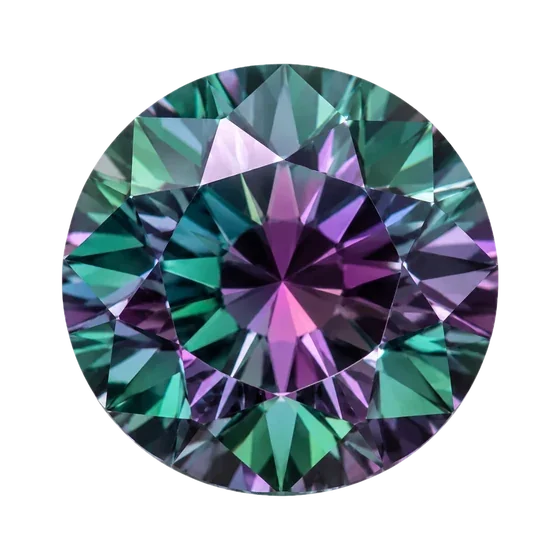
A stone with two faces
Alexandrite is a rare colour-change variety of chrysoberyl. Traces of chromium let it absorb light in a very narrow balance, so the stone leans green to bluish green under daylight and shifts to red or purplish red under warm, incandescent light. The stronger and cleaner that change, the more the stone is valued.
History
It was first found in the emerald mines of Russia’s Ural Mountains in the 1830s and named after the young Tsar Alexander II. Its red and green echoed the colours of imperial Russia, and it quickly became a stone of the court. The original Ural deposits were largely worked out long ago, which is part of why fine alexandrite remains so scarce.
Wearing & care
At 8.5 on the Mohs scale, alexandrite is tough enough for rings worn every day. Clean it with warm soapy water and a soft brush, and look at it under more than one light source — that is where its character shows.
Where ours come from
The alexandrite in our archive is sourced from Sri Lanka and Madagascar, and every stone is examined by hand before it is set.

